
What a lawn care round actually involves
Four steps, in order, every time — and why each one exists rather than being decoration.
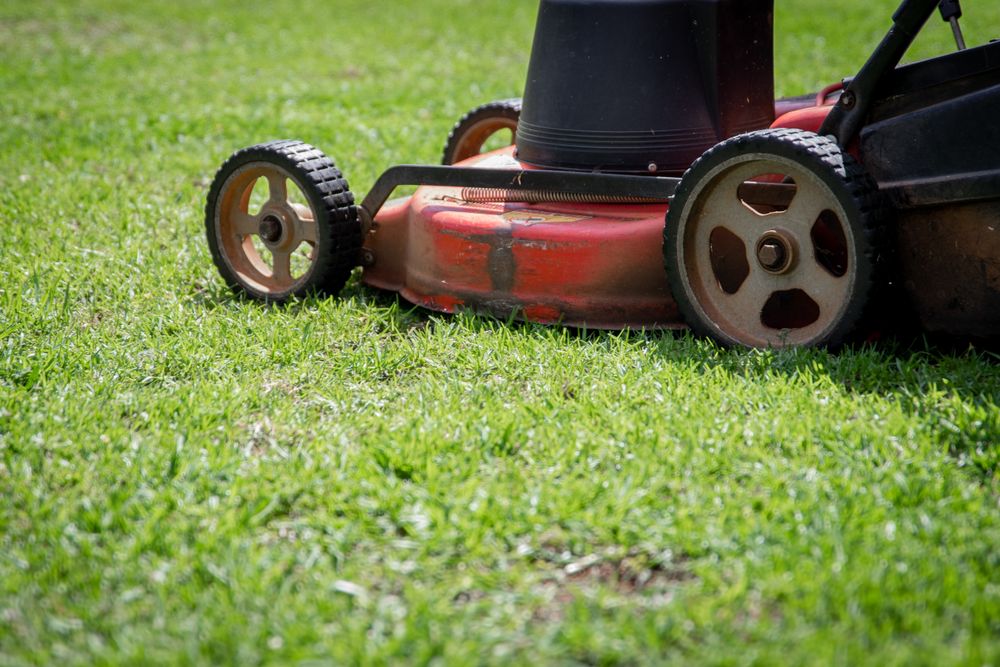
A lawn care visit is one sequence with four parts, and the order is not negotiable: you size the lawn, you make the cut, you finish the edges, and you clear what comes off. Each step exists because the one before it created a problem for it. Skip the edges and the mowing looks unfinished. Skip the clear-up and the cut looks like it was never finished at all.
1. Taking the lawn in
Before anything moves, the lawn is read. How big is it in square metres, which way does it slope, is there a gate narrower than the mower, are there tree roots, irrigation heads, dogs or a border that the deck cannot get near. None of this is written down for a residential visit, because nobody needs a report — but it is the part that determines whether the rest of the sequence goes smoothly.
The other thing being decided is the height. A lawn is cut at a height that suits the grass it actually is, and a regular lawn is kept at that same height every visit. Changing height up and down between cuts is what puts the stress on a sward: cut short, let it grow long, cut short again, and the crown thins out over a season or two.
2. The cut
The mowing itself is the least interesting part and the one that takes the most time. The passes overlap so the whole surface is cut once and only once, and turns are made on ground that has already been cut, because spinning a mower on uncut grass leaves a flat twisted stripe that stays visible for weeks.
Direction changes between visits. Always mowing north to south leaves permanent tramlines — the wheels compact the same strip of soil every time, and that strip grows back paler and thinner than the rest. Turning ninety degrees on alternate visits evens it out.
3. The edges
Once the main cut is down, the mower steps back and the borders get done. A mower deck stops short of a path, a wall or a fence line, and what is left is a strip of long grass and bare soil that no amount of good mowing hides. A strimmer takes that strip back to the same line as the mown grass; along hard edges the line is cut back with a spade.
This is also where the care shows. Strimmers do not know the difference between a weed and a plant somebody paid for, so the beds are worked by hand and the arisings are raked out rather than blown into the planting. It is slower than the rest of the visit and it is the part neighbours notice.
4. The clear-up
Clippings are the last problem. Fine, dry clippings dispersed back into the sward feed the soil and disappear; heavy, wet clippings raked into the beds do not, and they mat down, block light and blow onto paths every time the wind gets up. A tidy-up puts them on a barrow and off the property.
Paths, drives and the gutter lines get swept as well, because clippings collect at every edge where the mower or the strimmer turned. By the end of the sequence the property should look like the lawn got shorter, not like a person worked on it for a morning.
More lawn notes
Prefer it done than read about?
Supergrassguy is a mobile lawn care service in Christchurch. The Google Maps listing is the one published way to reach the operator.