
What a Christchurch lawn does through the year
Four seasons of growth, four different jobs — and the winter months that decide how the spring lawn starts.
A lawn is a record of the weather, and in a temperate climate the year divides into four stretches of work that look nothing like each other. Treating the lawn the same way in each of them is the most common self-inflicted problem a property can have.
Spring: growth catches up
From September the soil warms and the growth rate climbs week by week. A lawn that was barely moving in August can need cutting twice in a week by late October. Spring is when a maintenance round either gets ahead of the growth or loses it: regular short cuts keep the sward dense while it thickens, and a single hard catch-up cut after a long gap removes too much leaf at once and sets the lawn back.
It is also the time to deal with what winter left behind: bare patches, moss in the shaded corners, and edges that have gone to seed along the fence lines.
Summer: demand at its peak
December through February is the hardest stretch on a lawn and the easiest to get wrong. Growth is at its fastest, so intervals shorten; rainfall is least reliable, so the lawn sits between irrigation cycles and drought stress; and any bare ground opens up for weeds while the grass is under pressure. Height matters most here — a lawn held a little taller survives dry spells that would scalp a short one, because it shades its own soil and its roots sit deeper.
Autumn: leaf fall takes over
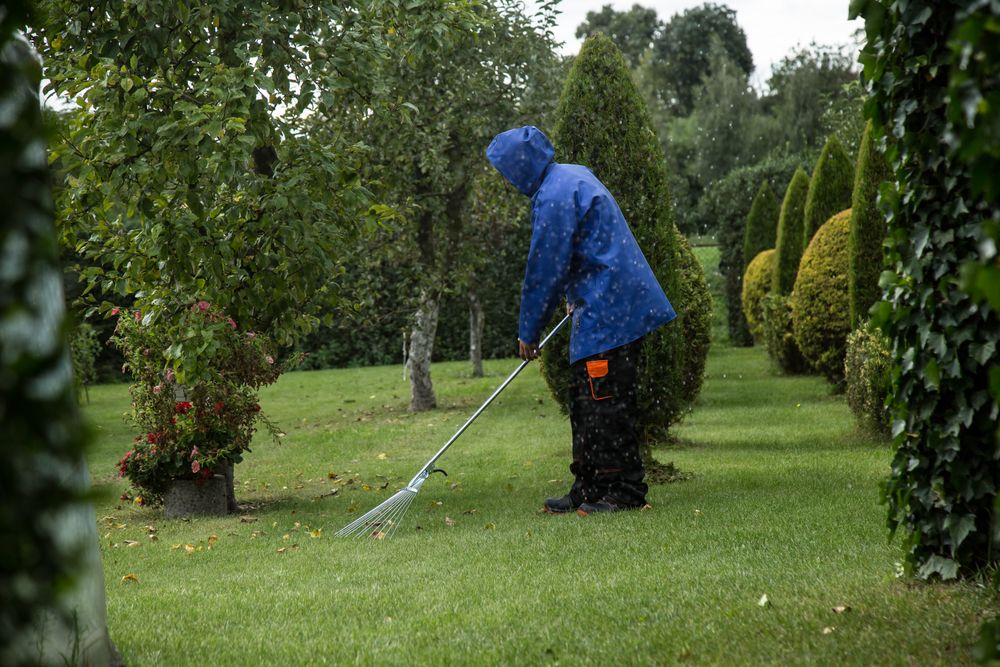
From March the growth slows and the workload changes character. Mowing intervals lengthen, and the work shifts to clearing. A lawn covered in wet leaf litter gets no light and no air, and the mat that forms is the standard reason lawns look thin in the spring. Raking the leaves off the grass, out of the beds and off the paths is most of the useful work through this period.
Winter: mostly hands off
June to August is the dormant stretch, and the correct activity is the least. The grass is growing slowly, so cutting frequency should drop sharply; the ground is frequently saturated, and a mower on wet turf leaves ruts and compats the soil in a way that shows up for months. Frost is the other line in the sand — walking on frozen grass breaks the blades, and the damage does not show until it thaws.
Winter is still worth doing something about. Drainage paths kept clear, gutters and downpipes free of leaf litter, edges and beds cut back so nothing is sprawling across a path when spring arrives — that is what a winter visit is for. What is not worth doing is mowing a lawn that has not grown, just because the visit was booked.
More lawn notes
Prefer it done than read about?
Supergrassguy is a mobile lawn care service in Christchurch. The Google Maps listing is the one published way to reach the operator.