
Shape held, not guessed
Straight sides, a level top and clean ends, taken from the existing form rather than invented from scratch.
Hedges and shrubs are cut for shape. The work is hand tools, a taper that lets light into the base, and enough regularity that the plant stays the size it is meant to be.
A hedge is a plant, and it grows according to the plant's rules whether or not anybody is watching. Light reaches the top first, so the top grows fastest and the base goes bare. Light is the problem to solve: a hedge trimmed to the same width at the top and the bottom gets wider at the top, shades its own base and turns into a bare-legged screen of twigs.
The answer is a slight taper — narrower at the base, wider at the top — plus a cut that leaves the shape readable from the house rather than from the road. Where a hedge is being brought back from leggy, the base is taken back into the older wood and light is allowed back into it, which is slower to recover but is the only way to a hedge that is full from the ground up.
Timing matters as much as technique. A hedge cut hard in late winter has no leaves left to work with and is cut by eye. Cut once the season's growth is standing and the shape can be set from the foliage in front of you, which is why the same job looks like different work in different months.
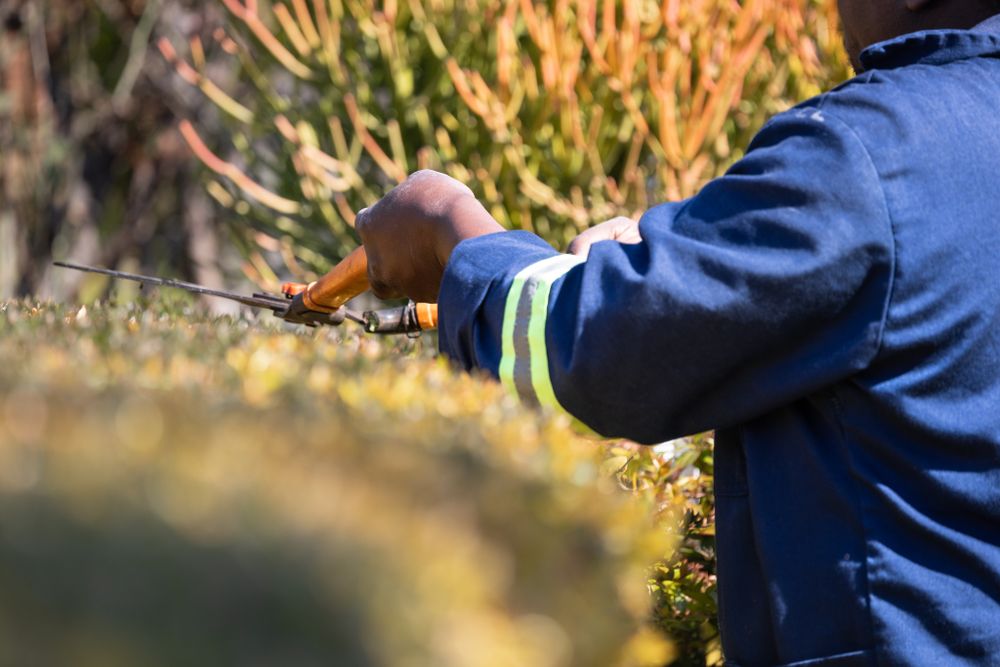
The checklist for judging the work, whether it is being done as a one-off or as part of a maintenance round.
Straight sides, a level top and clean ends, taken from the existing form rather than invented from scratch.
The base is kept slightly narrower than the top so the lower branches keep foliage instead of going bare and twiggy.
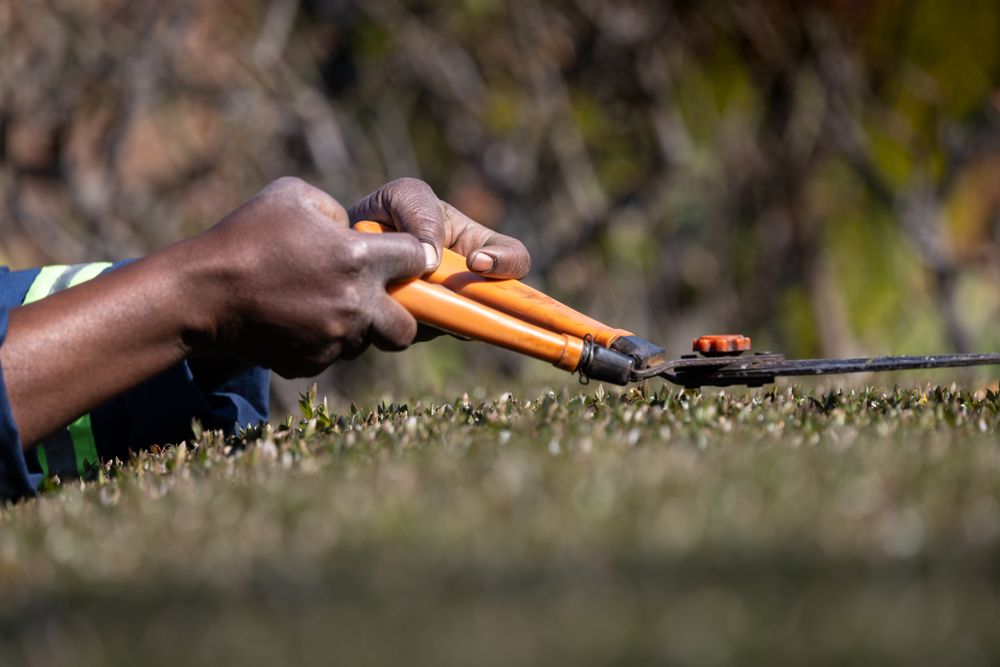
Shears and a hand rake for the shaping, so new growth and strays are cut cleanly and the bed underneath is left tidy.
Leaf litter and arisings are raked out of the bed so the new line is visible and the plant is not sitting in its own debris.
When a hedge has swallowed a path, a view or a window, the work is staged — take it back in steps over more than one visit rather than stripping the whole plant at once.
Some shrubs are better thinned and tidied than clipped to a block. Removing crossing and inward-growing wood opens the plant without changing its character.
A regular cut at a consistent height stops a hedge becoming woody at the base, which is the point at which reshaping gets expensive.
Supergrassguy is listed in Christchurch, New Zealand and works as a mobile, service-area operator rather than from a shopfront. There is no published list of suburbs or service boundaries, so confirm that your address is covered before travelling.
No phone number, email address, street address, opening hours or price list is published for the business, which means there is nothing on this page to treat as a quote or a commitment. The Google Maps listing carries whatever contact details the operator has published there, and it is the one verified route to them.
The Google Maps listing is the one verified way to reach the operator — the business publishes no phone number, email address or street address of its own.